Why Choose Salt Lake City?
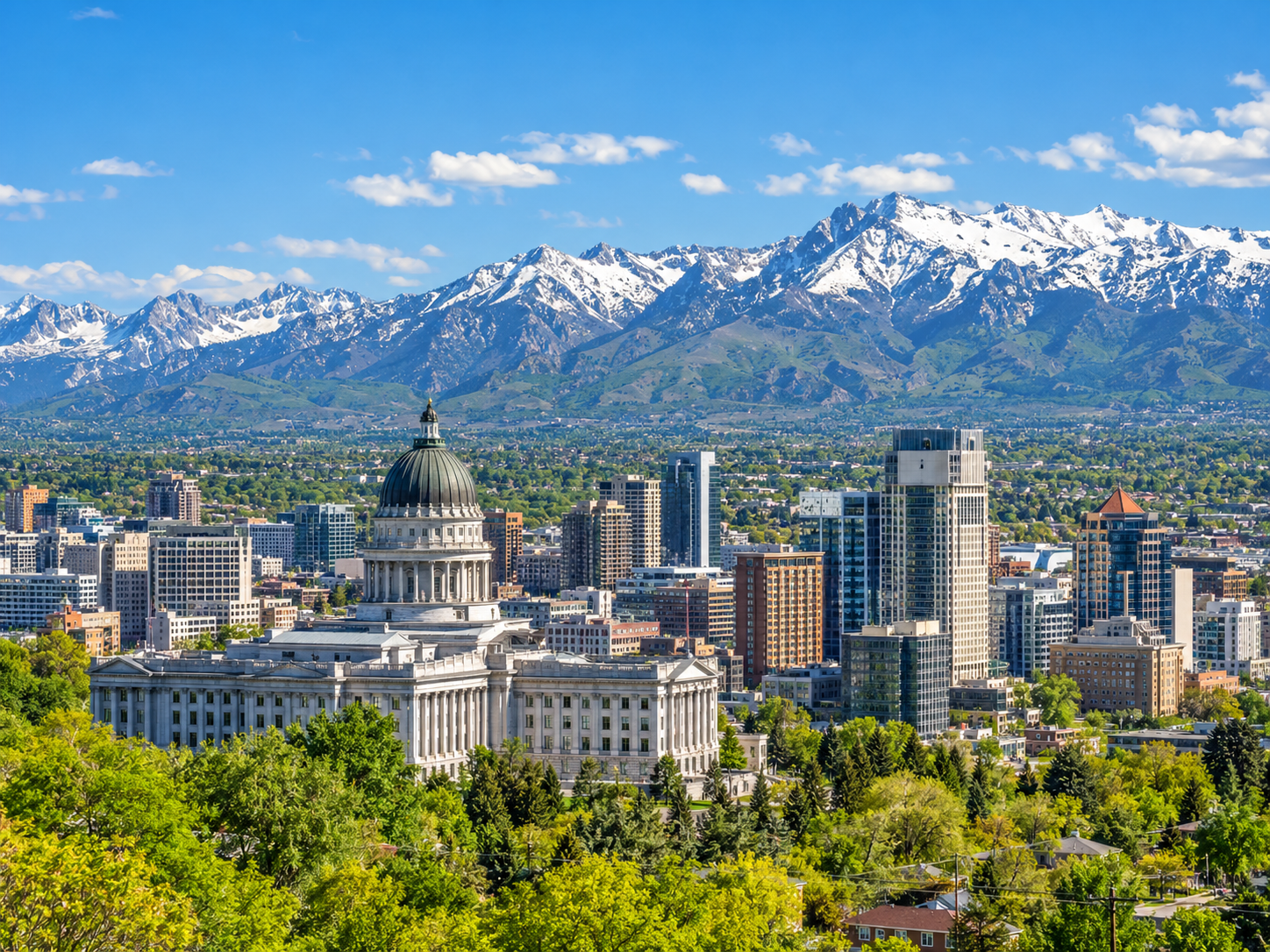
Salt Lake City combines metropolitan services with unusually close mountain access. Downtown provides restaurants, entertainment, employment, and cultural destinations.
Meanwhile, residential neighborhoods offer different housing styles and community settings. Outdoor recreation is also easy to reach from many parts of the city.
Cost of Living
Housing represents a major part of a Salt Lake City relocation budget. The 2020–2024 median owner-occupied home value was $539,500.
Meanwhile, median gross rent was $1,414. Therefore, buyers and renters should compare neighborhoods carefully before moving.
Real Estate and Housing Market
Salt Lake City offers single-family homes, apartments, condominiums, townhomes, and historic properties. Newer residential buildings are also available around downtown and other growing districts.
Before choosing a property, compare housing condition, parking, commute routes, and neighborhood services. Additionally, mountain views and transit access can influence location preferences.
Education
Salt Lake City School District serves families throughout the city. Programs include advanced learning, dual-language immersion, early childhood education, fine arts, and career-connected learning.
Families can also use the district’s online school locator to confirm neighborhood schools. Therefore, checking an address before moving is important.
The University of Utah provides another major educational resource. Its campus also supports research, athletics, healthcare, and cultural programs.
Healthcare Facilities
University of Utah Hospital is a major medical center within Salt Lake City. Its broader health system includes hospitals, neighborhood health centers, and more than 200 medical specialties.
Other hospitals, clinics, and medical offices operate throughout the Salt Lake Valley. As a result, residents have access to both routine and specialty care.
Recreation and Leisure
Salt Lake City manages about 735 acres of parkland. Liberty Park, Sugar House Park, Pioneer Park, and neighborhood parks provide varied recreation.
Beyond city parks, natural areas and foothill trails offer hiking and outdoor recreation. The Jordan River Parkway also provides an extensive paved trail system.
Dining and Shopping
Downtown Salt Lake City combines local restaurants, international food, cafes, bars, and specialty shops. Visitors and residents can also find modern dining alongside long-established local businesses.
Meanwhile, additional shopping districts and commercial corridors serve neighborhoods throughout the city.
Events and Festivals
Salt Lake City hosts concerts, sports, festivals, performing arts, and community events throughout the year. Downtown maintains an especially active entertainment calendar.
Additionally, university programs and seasonal celebrations provide more choices for residents.
Transportation and Accessibility
Utah Transit Authority operates TRAX light rail throughout the Salt Lake Valley. Three lines connect Salt Lake City with destinations including the University of Utah and Salt Lake City International Airport.
Bus service and regional FrontRunner trains provide additional transportation choices. However, many residents still use cars for mountain trips and suburban travel.
Salt Lake City International Airport also provides extensive regional and national air connections.
Conclusion
Salt Lake City combines mountain recreation, employment, healthcare, education, transit, and diverse housing choices.
Before relocating, compare housing costs, schools, commute routes, parking, and neighborhood amenities. Overall, the city can appeal to residents seeking urban convenience with easy outdoor access.