Why Choose St. George?
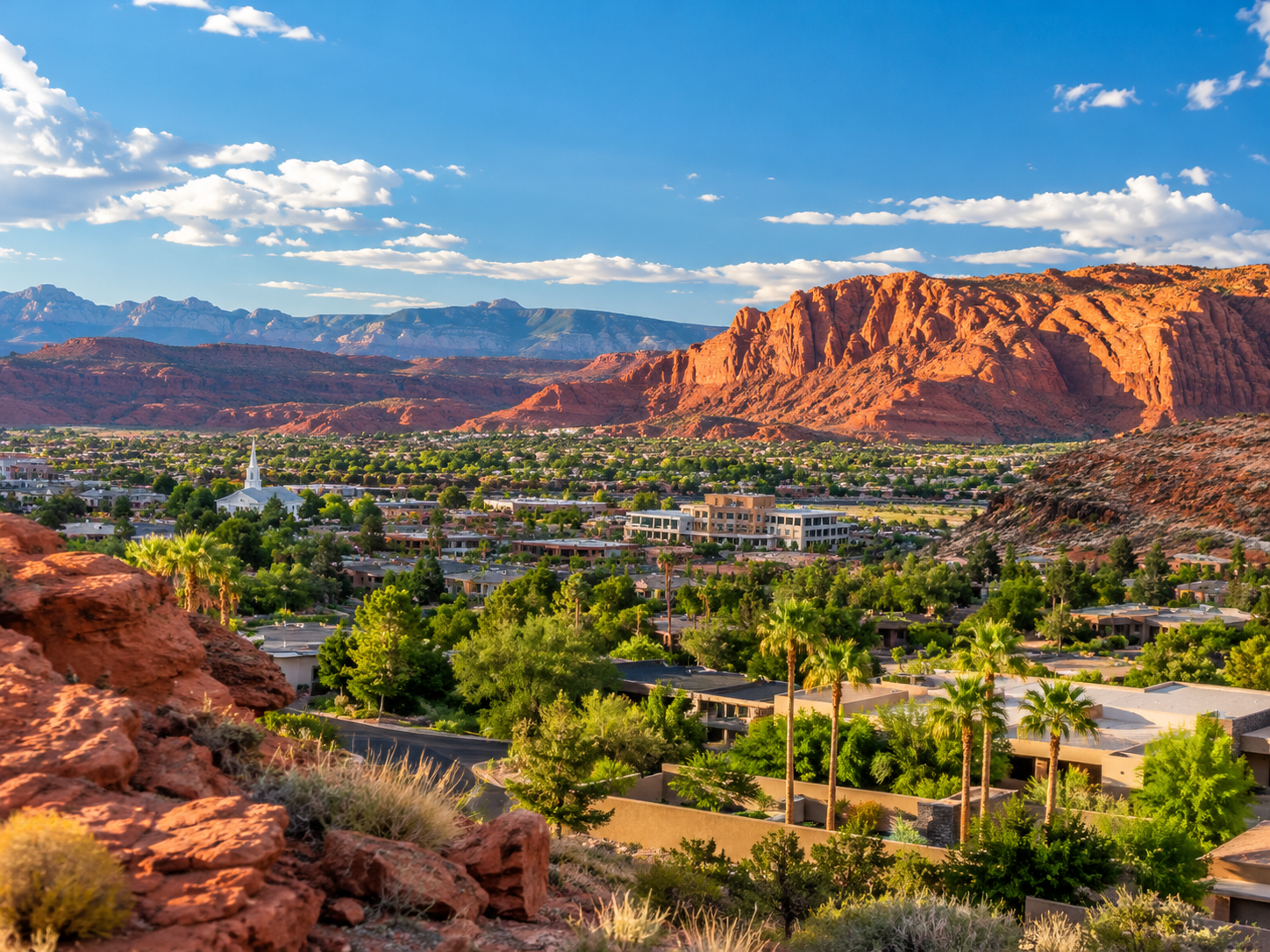
St. George combines city conveniences with a distinctive desert setting. Additionally, mild winters make outdoor activities possible during much of the year.
Downtown provides shops, restaurants, galleries, and community spaces. Meanwhile, red-rock recreation surrounds the city in nearly every direction. Greater Zion
Cost of Living
Housing represents an important part of a St. George relocation budget. The 2020–2024 median owner-occupied home value was $496,100.
Meanwhile, median gross rent was $1,545. Therefore, buyers and renters should compare housing, utilities, transportation, and insurance carefully. Census.gov
Real Estate and Housing Market
St. George offers single-family homes, apartments, townhomes, condominiums, and newer residential communities.
New development continues across several parts of the city. Before choosing a home, compare commute routes, neighborhood services, HOA costs, and desert landscaping needs.
Education
Washington County School District serves St. George and surrounding communities. The district operates elementary, intermediate, middle, and high schools throughout the area. Washington County School District
Families should confirm the assigned school for each property before moving. Additionally, Utah Tech University provides higher education within St. George.
Healthcare Facilities
St. George Regional Hospital is a major medical center for southern Utah. The 284-bed hospital also serves as a Level II Trauma Center. Intermountain Health
Clinics, urgent care centers, and specialty practices provide additional choices. As a result, residents have access to both routine and advanced medical services. Intermountain Healthcare
Recreation and Leisure
Outdoor recreation is one of St. George’s biggest attractions. City planning documents report more than 70 miles of paved trails within the local system. Sandy City
Pioneer Park, desert trails, golf courses, and nearby Snow Canyon provide additional options. Furthermore, the Red Cliffs landscape surrounds much of the region. Visit Utah
Dining and Shopping
Historic downtown St. George includes boutiques, restaurants, galleries, and locally owned businesses. Ancestor Square is another popular shopping and dining area. Greater Zion
Meanwhile, Red Cliffs Mall, The Shoppes at Zion, and larger commercial corridors provide additional retail choices. The wider Greater Zion area also supports a broad restaurant scene. Greater Zion
Events and Festivals
St. George hosts arts events, sports, farmers markets, theater, and seasonal celebrations throughout the year.
For example, the region’s 2026 calendar includes the Huntsman World Senior Games, Downtown Farmers Market, theater productions, and historic district walking tours. Greater Zion Events
Transportation and Accessibility
Driving remains the primary transportation option for many residents. Interstate 15 connects St. George with other southern Utah communities and regional destinations.
However, the city also operates SunTran public transportation. Bus services provide another option for local trips. St. George
St. George Regional Airport provides additional travel access for residents and visitors.
Conclusion
St. George combines red-rock scenery, suburban neighborhoods, healthcare, education, shopping, and outdoor recreation.
Before relocating, compare housing costs, school boundaries, commute routes, HOA requirements, and summer utility needs. Overall, St. George can appeal to residents seeking desert living with strong everyday amenities.